Train the Trainer report – Team Tanzania – October 2018

By | Train the trainer | No Comments

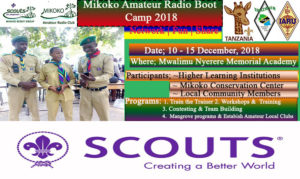
Many coming your way please notice that our youth here are likely to engage to Amateur Radio but they don’t know what all about Amateur Radio means so we are preparing some university presentations from end of this month in preparation of National YOTA event branded as Mikoko Amateur Boot Camp 2018.


Amazing Story I can share little to you today before sending my summary since YOTA 2018 in SA here below


“I can just imagine at first I saw people using VHF Radio and I was so much interested to use it but I can’t even touch them but thorough Amateur Radio Network I have been one of the pending/upcoming licensed Amateur Radio but mostly YOTA 2018 have been much interesting and motivate me to work on my dreams”


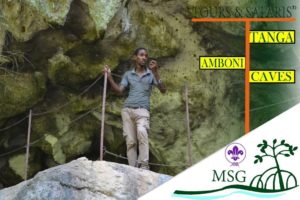
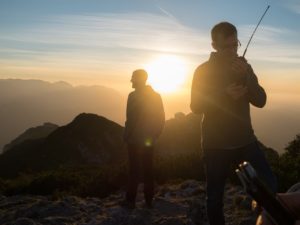
With my picture I was instructing the team of individuals who are guiding our visitors through Mikoko Tours & Safaris (www.mikokotours.msg.or.tz ) I shall be updating new Amateur Event local website supported by Mikoko Scout Group (www.amateur.msg.or.tz )


73

Olais K. Raphael

Train the Trainer report – Team South Africa – October 2018

By | Train the trainer | No Comments

Jeugland Amateur Radio Club – ZR6JRC

Youth Activity post YOTA

During a Club meeting we decided to ask our members, like we did at YOTA what are their interests and what would work for them, and not surprisingly it was much the same list.

Kit building, ARDF, Morse, Bacar, SDR, Satellites, Micro processors, Antennae building, Contesting, YOTA month and JOTA/JOTI.

This was then split up into activities for this year and those for next year. For the remainder of this year we have decided to focus on a power supply kit, a micro processors project, YOTA December month participation and contesting.

2019’s activities will continue with learning more about micro processors with an eye on flying such a project on BACAR, antennae building for satellites, Morse code learning and ARDF. We also plan to run a RAE course in the first half of 2019.

Marketing

Marketing of our club ZR6JRC is also a priority and this was done at the recent introduction evening of the school to the prospective new students for 2019

(From left to right: Maryna ZR6MC, Jos ZU6JOS, Nadia ZU6NAC, Dewald ZU6DRH, Cameron ZS6CYE)

School Awards

For the first time scholars received recognition for their Amateur Radio achievements during the October awards ceremony at the school with Dewald ZU6DRH and Nadia ZU6NAC being awarded certificates of achievement, ZR6MC, and ZS6CYE receiving Honours colours.

As far as we know, Jeugland is the first school in the country to recognize Amateur Radio as an educational subject.

   KIT Building

Kit building started off with the construction of a PSU. Pc boards were etched and drilled and then components soldered. This took longer than expected due to the different levels of competence of the club members. Care will have to be taken in future to match complexity and skill.

Micro Processors

A Donation of Arduino kits allowed us to send 5 club members home with a kit to play with.

These will be recycled to other members, and hopefully assist with the next BACAR challenge.

Contests

ZR6JRC took part in the SARL national field day competition on 8 – 9 September 2018, with a field station being set up on the hockey field. A national 7th placing was most welcome.

   JOTA Weekend

The Scout JOTA event saw Guy ZSGUY and Jos ZU6JOS Camping with the scouts at Modderfontein reserve (grid locator KG43BW) 

Other club members came at various times during the weekend to man the station. Conditions on 40/80 meters were not very good, but we managed to contact V51WW (Namibia). Rain, cold winds and lightning were some of the challenges but a most enjoyable experience.

73

The ZR6JRC club members.


Train the Trainer Report – Team Austria – October 2018

By | Train the trainer | No Comments

Following the YOTA camp in South Africa, the Austrian team was very enthusiastic and highly motivated to get more youngsters involved in ham radio. After we discussed the best approaches to the problems we faced and all the things we had learned during the TTT sessions in South Africa, we started discussing our plans with the OEVSV Youth Coordinator, OE3FTA, the President, OE3MZC, and other members of our society. The support we received was very large and the leadership of the society is equally as convinced as we are that it is necessary to increase the number of young members.

At the YOTA TTT sessions we laid out a very simple plan which consists of three stages:

  1. Build up a network of existing youngsters
  2. With this group “re-activate” youngsters which were licensed but then lost interest
  3. With this larger group of youngsters work to get completely new members

Stage 1 of our plan is well underway with a network of youngsters developing around the Vienna area which meet at the OEVSV headquarters every Wednesday to discuss future plans, technology projects, contesting etc. OE3BVB, part of the Austrian team in South Africa arranged for  4 youngsters who have limited to no contesting experience to take part in the CQ WW SSB contest at a major contesting station. A number of similar projects are developing which are bringing the group of youngsters closer together whilst also expanding it. A few of the youngsters also participated in the IARU Region 1 VHF contest with the call OE1W, a great opportunity to learn about VHF stacks and a very fun weekend of antenna building and operating.

Stage 2 is proving to be more difficult as we have not been able to get access to a comprehensive list of licensed youngsters, this is mainly due to privacy and data protection regulation. We will have to find a way around this problem to be able to find those youngsters who were licensed but are no longer active.

Stage 3 is not our priority at the moment, however lots of ideas have come up and there is a lot of enthusiasm for a number of possible projects in this stage. One example of the work which we are actively doing at the moment is the JOTA event which will be co-organised by OE3BVB. Apart from this there is a lot of work being done by other society members, for example a number of courses for the radio examination are offered at government organisations, technology and soldering workshops such as building antennas and presentations on all kinds of interesting topics.

What we have learned so far is that it is very important to have a lot of communication between youngsters, in our case this is quite effective with the weekly meetings, however members who are too far away to join these can communicate via whatsapp/telegram groups. This seems to be the most important factor for existing youngsters as many did not know any other hams of their age before and can find a completely different environment which is much more interesting and engaging in these groups.

We hope that our group of youngsters will continue togrow, and that the teams of other countries will have similar or even greater successes,


73 de OE3VVU

Youth Contesting Program 2018 – 4O4YCP (@4O3A)

By | Community Written, Publication, Youth Contesting Program | No Comments

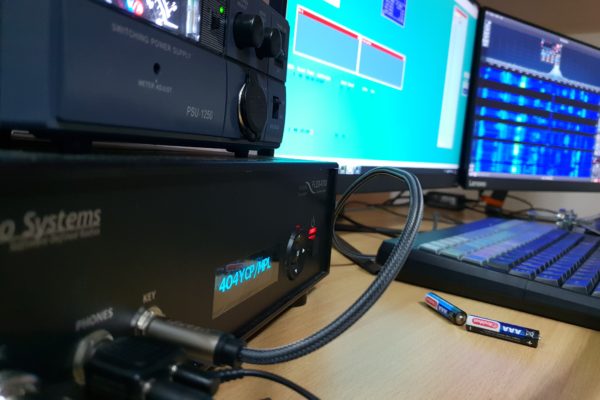
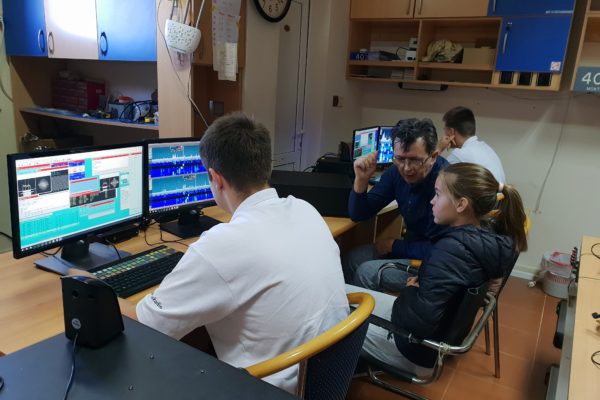
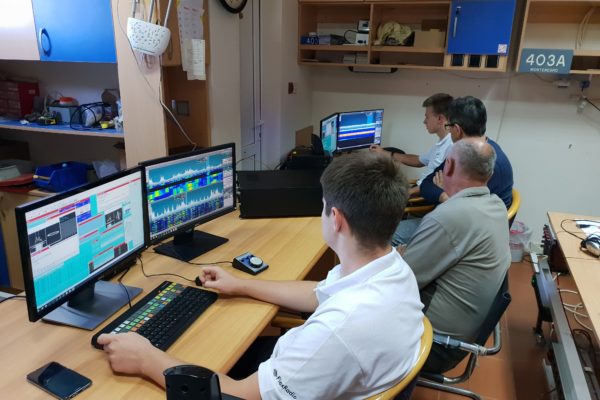
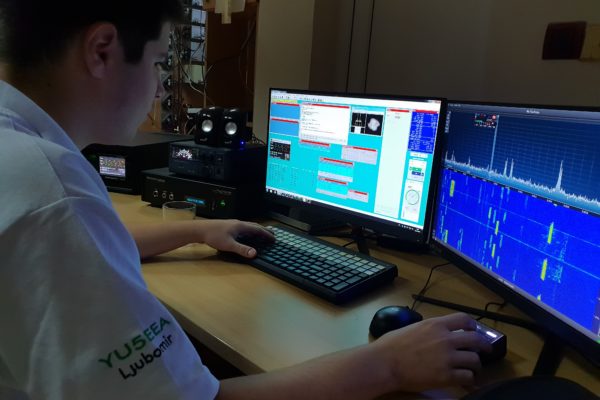
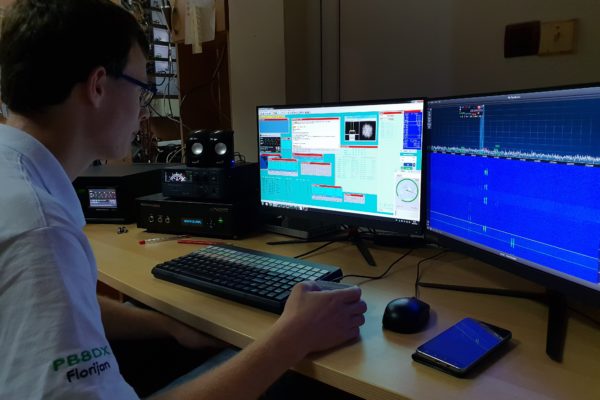
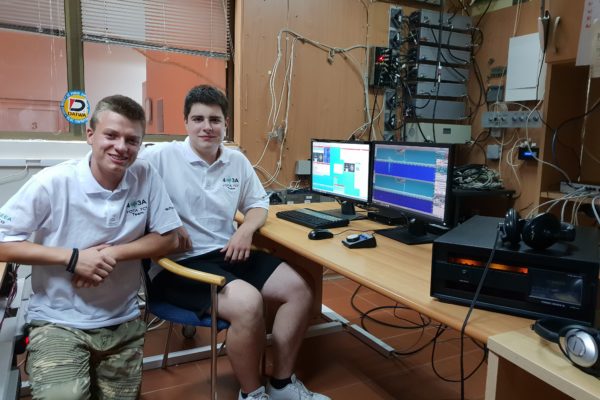
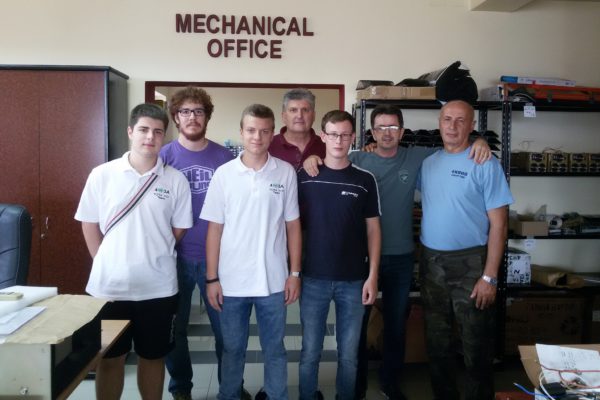
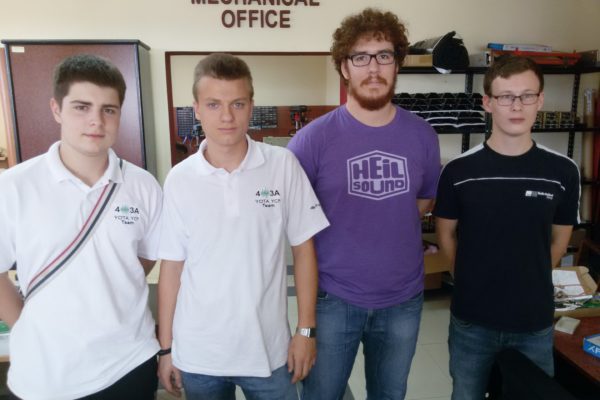
I had heard of the YCP from my friends Fiodor IZ7YBG and Riccardo IV3CVN so I decided to apply myself to see a big contest station at work. I has been chosen for 4O3A, for CQWW RTTY 2018 contest, so I planned my travel by car to Montenegro. At the airport of Dubrovnik I met Florian PB8DX and together we reached the 4O3A peninsula, because we cannot use mobile phones in Montenegro we used 2 repeaters to talk with Marko who helped us with directions.

Finally, on the evening of Thursday we arrived at the meeting point where Marko 4O9TTT picked up us and took us to the station, it’s on a mountain so a 4×4 vehicle was needed to reach it, Marko is the president of the MARP and stayed with us for the contest to help us with FlexRadio, we met also Roby E77E, the chef, there was also Ljubomir YU5EEA who was testing the station with a pile up. During the next day Jahko YU3EEA joined us and the contest team was complete, we met Ranko 4O3A during the afternoon, he with Marko explained how to manage the station and use FlexRadio and also some suggestions for the contest.

During the contest we had planned shifts of 4 and 6 hours to work at the station and go to sleep, shifts were good and also sleep was needed to survive the 48hrs.

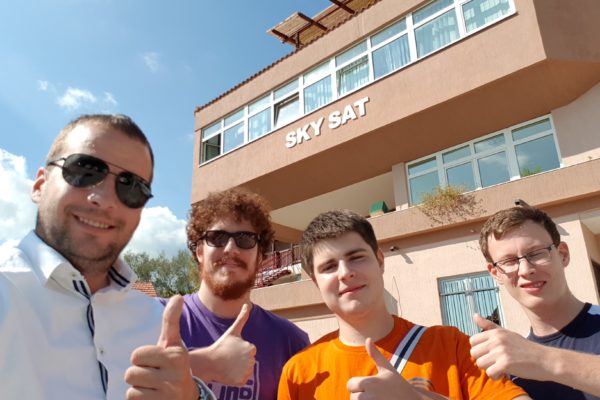
The Monday after the contest we went to the SKYLAB, the house of Ranko and also the laboratory where the FlexRadio are made, it was very interesting to see how a sdr radio is created. After a good lunch with ćevapčići I left for return to Italy which took 1 a day and a half.

I am very happy for this experience, it has given me the opportunity to improve my ham radio skills, meet new people and visit new countries. Many thanks again for the great opportunity and all the work of the team in 4O to make it all happen.

I suggest every youngster to apply for the YCP, you will not regret!

73 de Matteo, IU2GGL
team member 4O4YCP (@4O3A)

December YOTA Month application is open

By | Publication, YOTA Month 2018 | 2 Comments

Apply now for December YOTA Month.
Make sure to register before December starts!

The last few months of 2018 are approaching and we are excited to announce that our famous December YOTA Month will happen this year. We would like to invite you to take part with a callsign with YOTA as the suffix, for example, HA6YOTA. The idea for this is to show the amateur radio hobby to young people and to encourage youngsters to be active on the amateur bands.

This is a great moment to show amateur radio to the world and to invite newcomers. Give a demonstration in a school, local club or scouting group, gather together with your friends, grab a pizza and make some QSOs or enjoy a great pile-up.
Feel free to make a QSO with the youngsters, they are happy to get some attention and exchange information. Licensed and unlicensed youth will be making QSOs, be aware this could be their first radio contact ever and give them a chance to experience a possible new hobby.

This year we will have new diplomas and rules!
Diplomas can be achieved by working our YOTA suffix special stations which are run by young operators throughout December! We changed a bit on the general rules; 2 points can be achieved per worked stations and 1 extra point for every valid (not dupe) QSO per band per mode!

This is of course not a contest, but getting many youngsters on air from many countries. Be helpful on the bands, maybe these young operators are just making their first ever contacts!

The aim is that YOTA stations are in general operated by young people, with the age of maximum 25 years. The event will take place from 1 December 2018 00:00 UTC till 31 December 2018 23:59 UTC.

Are you interested? Would you like to take part or want to know more about the new diploma rules? Find more information on https://events.ham-yota.com/

You can also find us on social media platforms, like #hamyota on Facebook and @hamyota Twitter. You can also join our Facebook group by facebook.com/groups/youngstersontheair where you can find up-to-date information during December.

Invitation to the world’s largest annual youth event

By | Publication | No Comments

JOTA-JOTI
Two million young people from around the world are expected to take part in this year’s Jamboree-On-The-Air-Jamboree-On-The-Internet (JOTA-JOTI), the world’s biggest Scouting event.

During JOTA-JOTI, which takes place this year from 19-21 October. Scouts and Guides will encounter numerous different languages and cultures in a worldwide learning experience that lasts all day and well into the night.
JOTA-JOTI is designed to make participants feel that they are truly part of a global Movement. Whatever their age, religion, colour, ability, or disability, everyone can join the annual travel-free Jamboree wherever they are in the world. JOTA-JOTI is always held on the third weekend of October.

Scouts use amateur radio and the Internet, to connect with each other over the JOTA-JOTI weekend. The initiative helps to promote cultural awareness, develop tolerance, and enhance sharing, collaboration and teamwork.

Some 20,000 licensed amateur radio operators put 12,000 radio stations on the air with state-of-the-art technology. This offers an excellent opportunity for young radio amateurs to inspire young Scouts with the charms of radio techniques. And for Scouts to share their world with radio amateurs of (nearly) their own age.
This could lead to follow-up activities during the Youngster month in December and field days e.g.

SSTV badges
One of the main activities for Scouts in this year’s JOTA is to exchange badges (as electronic pictures) via SSTV. With the target to let them experience a different technique combined with a well-known Scout activity to swap badges. SSTV has become so much more accessible with a laptop or smartphone and some software, combining the radio and the digital world. It is in particular for this activity that young amateur radio operators can play an important role in making the connections and discovering the possibilities of SSTV.

Join in
We invite all young amateur radio operators to get in touch with the nearest Scout group and join in the JOTA-JOTI. Likewise, we invite all local Scout group leaders to contact the amateur radio clubs in their region to ask for support by young amateurs for their JOTA-JOTI event.

To assist with finding a Scout group, radio operators may contact the National JOTA-JOTI Coordinator in their country. Email addresses are available at:
https://www.jotajoti.info/wp-content/uploads/2018/09/NJC-2018-4.pdf

To assist with finding young radio amateurs, Scout groups leaders may contact the youth coordinator of your IARU member society:

Region 1 (Africa, Europe, the Middle East, and northern Asia):
https://iaru-r1.org/index.php/youth-coordinators
Region 2 (Americas):
Gustavo de Faria PT2ADM pt2adm(@)pobox.com
Region 3 (Australia, South-East Asia, Pacific Islands):
Jakkree Hantongkom HS1FVL jakkree(@)iaru-r3.org

About the International Amateur Radio Union (IARU)
The International Amateur Radio Union (IARU) is an organization consisting of over 160 national amateur radio societies around the world. Created in Paris, France, the International Amateur Radio Union has been the watchdog and spokesman for the world Amateur Radio community since 1925. The IARU Constitution, last amended in 1989, organizes the Union into three Regional Organizations that correspond to the three radio regions of the International Telecommunication Union (ITU).
The IARU represents the interests of the Amateur Radio Service worldwide to relevant international organizations, promoting the interests of amateur radio and seeking to protect and enhance its spectrum privileges. IARU is working for the future of amateur radio.

Youngsters On The Air (YOTA)
YOTA is an initiative of the Youth Working group of IARU Region 1. The program is focussing on bringing young radio amateurs together in events and on the air. YOTA is encouraging young radio amateurs to organize youth amateur radio events and to develop youth programs connected to amateur radio. Aim is to invite newcomers to the beautiful hobby and to show amateur radio to the world. Youngsters On The Air started in 2011 with an international youth summer camp and over the last years it developed to a program with activities spread over the entire year, on local, national and international level. Think about a yearly summer event with more then 30 international teams taking part, a sub-regional YOTA weekend or December YOTA month where many youth radio stations will become active on the air. This is just a bit of the YOTA program, it’s growing year by year! Join the YOTA train!

About the World Organization of the Scout Movement (WOSM)
Scouting is one of the world’s leading educational youth movements, engaging millions of young people around the world to be active citizens and create positive change in their communities. Founded by Lord Baden-Powell in 1907, WOSM is a federation of 169 National Scout Organizations in a network of over 50 million Scouts in at least 224 countries and territories worldwide. The organisation is based in Kuala Lumpur, Malaysia.

For more on JOTA-JOTI:
http://www.world-jotajoti.info

For more on YOTA:
http://www.ham-yota.com


Richard Middelkoop, PA3BAR
World JOTA-JOTI Organizer WOSM

Lisa Leenders, PA2LS
Youth WG Chair IARU R1


YOTA South-Africa 2018, a start of something bigger

By | Publication, YOTA South Africa 2018 | No Comments

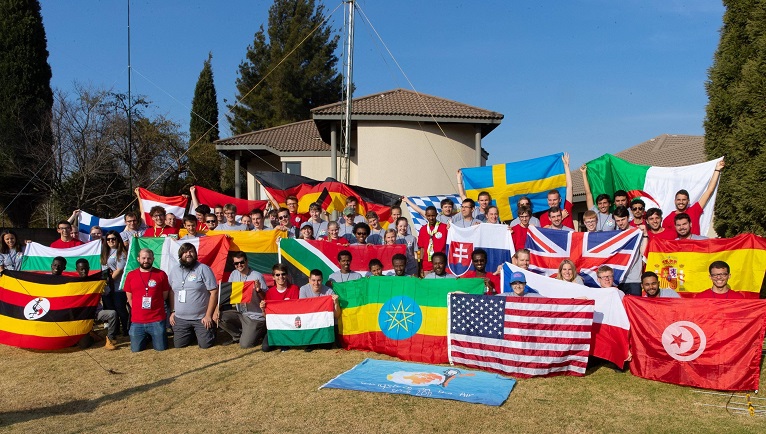
Can you imagine? 23 teams, from all over Africa, Europe and USA travelled to South-Africa to take part in the annual Youngsters On The Air event. Yes, it did happen. 74 Young radio amateurs found their way to Gauteng, close to Johannesburg. This made it also happen that we had in total 7 African countries taking part, more then ever. 25 Persons had the opportunity to take part, after an intensive training, in a HAREC license exam. 20 Of them passed, great achievement, especially if you are aware that most of them don’t have the opportunity to take part in an exam at their home country.
Enough numbers for now, the youngsters took part in many activities in the week itself. A programme was made which was showing amateur radio in South-Africa with focus of train-the-trainer. SARL is making good progress on youth and amateur radio. Think about Hammies, Jeugland radio club or JOTA/JOTA.

Train-the-trainer? This was the first event with our renewed focus. There were several sessions were teams showed their ideas on how to develop amateur radio and attract newcomers to the amateur radio hobby. With this we are creating a snowball-effect, organizing similar activities back at home will make it happen that more persons can join YOTA or amateur radio. The teams all got homework to do, in 2 months we expect from them an article in their national amateur radio magazine about the event and a plan on starting their own youth program or organizing new amateur radio events. They all are free to come up with their own ideas, but got inspired the entire week.

A week has only 7 days, believe it or not, SARL made it happen to put more days in a week. Still being impressed about what we did in one week. There were many lectures and workshops, about contesting, DMR, Marconi and a demonstration of Marconi’s used equipment, a presentation on radio in wildlife (tracking animals) and much more. Starting with building own YAGI antenna’s and using this later to make satellite contacts, followed by a technical and hands-on SDR workshop. Working as a real project team to prepare a payload for a BACAR (Balloon Carrying Amateur Radio) balloon flight, we also launched the balloon, used the SDR and antenna to make contacts and gather data. After a good braai (South-African BBQ) all participants showed in a presentation the analysis of the recovered data of the payloads.

The youngsters did kit building with QRP labs, some of them couldn’t get enough and kept on building late in the night. There was a radio shack were ZS9YOTA was activated in modes as SSB, CW and FT8.
With so many cultures taking part in the event, we continued our yearly tradition of the intercultural evening. All teams brought food, drinks and even traditional clothes from their home-country.
Luckily the youth got the chance to see a bit of the South-African beauty, the group went on safari to see the big five! The farewell party, including an African drumming session, was a great last goodbye.

All this organized by SARL, the South African Radio League, under lead of Nico van Rensburg ZS6QL (President of SARL) and Koos Fick ZR6KF (Youth Coordinator of SARL). They didn’t do this all alone, they had a great group of volunteers helping them out to make this all happen. A special thanks to the entire organizing team and SARL!

This is only a part of everything the youngsters took part in. Do you want to read more or see more of the event?It’s all covered, have a look here.

A popular question, where will YOTA 2019 take place? Unfortunately we still did not receive any application. Are you interested in organizing an unforgettable event which will change the life of many young radio amateurs and be part of the future of amateur radio? Contact Lisa, PA2LS, Youth WG Chair IARU R1.

YOTA ZS 2018 Farewell (Blog #4)

By | YOTA South Africa 2018 | No Comments

Even with the more “serious” parts of the program being over, the theme of lacking opportunities to catch sleep continued onto the last official day, with a bus leaving the hotel early again (though at least not 4:20 again).

However, it was for a program point that, in this way, has not been possible on any of the European YOTA Camps before—a safari through the South African bush. With how packed the schedule was, this also meant a first chance to get the “Africa Feeling” for the European teams, or at least get to see (South) Africa as we all imagined.

After arriving at the game lodge and splitting the participants among the available cars, we went off for a few hours, trying to see as many of the “Big Five”: Elephant, Lion, Buffalo, Rhino and Leopard. Success varied between the cars, but three of the five were seen by at least some—the ones that weren’t seen were the ones that could eat you for supper, so that maybe was for the best.

Coming back to the lodge, we were greeted by a small group (flock? herd?) of kudus (a type of antelope) and some zebras, with some participants experiencing that the latter do not like people coming up close. While most people were busy photographing and/or petting the kudus, lunch was being made, so that’s what everybody went for afterwards. With people well fed, it was time to take the 2-hour drive back to the hotel, which provided a way for people to exchange their photos of the wildlife they had seen earlier (as well as some others); in keeping with the spirit of the hobby, this was of course done using SSTV via 2m FM.

As most people used the opportunity to catch some sleep after coming back, the organisers found a great way of getting everybody awake again before dinner: a drumming activity, which consisted of everybody being supplied with a djembe drum, and then getting their hearts played out (and their hands played sore) together.

After dinner, it was time for the last official event of the camp: The Farewell Event. This included handing out the HAREC certificates to the 20 of the 25 RAE participants that passed, many “Thank you”s from participants towards the organisers and everyone else involved in the event, and of course celebration until long in the night. And, unfortunately, first hugs and tears for participants that were going to leave already very early in the day.

For everybody else, hugs and tears were reserved for the day following, with everyone getting back to the airport, after having found some way on how to get the reflector element for the satellite yagi back home.

Overall, we sincerely thank the organisers and sponsors for an outstanding event, once again setting the bar high for future YOTA Camps to come. Even with such a busy schedule (busy enough these blog posts got delayed as much as they did), we would not have wanted to miss a single one of the program points.

With all that said, all that is left is a heartfelt 73, and see everyone at one of the next YOTA events, whichever of the many it may be!

YOTA ZS 2018 Blog #3

By | YOTA South Africa 2018 | No Comments

Even with everybody still sleep deprived from the BACAR day, there wasn’t any time to catch up with sleep as the ambitious schedule continued on Sunday.

In preparation for what was going to take most of the day, including the tea breaks, Hans Summer, G0UPL, presented the next kit from his company, QRP Labs, that was going to be built. We won’t spoil anything here until Hans’ official announcement, but all we can say is that it is an amazing product, definitely one-upping last year’s QCX kit. It might or might not be the case that some information about it has spread throughout other YOTA media channels, so it is definitely worthwhile to look through the posts there as well.

However, when you try to beat a kit like the QCX, some people might be intimidated by the complexity; or they just want to build something that unexperienced kit builders can finish over the course of the camp. For this reason, Hans also brought other kits, namely his clock kit as well as the Ultimate3S WSPR kit, which builds upon the clock kit. For WSPR enthusiasts, you can be sure that there will be some rare WSPR DXCC(s) coming up rather soon!

With the presentation out of the way, it was time to start actually building the kits. While there weren’t enough soldering irons to keep everyone soldering without interruption (anyone want to lend ca. 80 irons to the next YOTA event? 😃), this also meant that more experienced builders could help the inexperienced one, creating a great learning experience. Also, with all the soldering fumes in the air, it probably was for the better that we did not have more.

At the same time, the lessons for the RAE (South African license exam) continued, an opportunity used by many to either upgrade their home license or take the exam in the first place, an opportunity not even offered in some of the countries participating.

The afternoon of that day had two more presentations. One was about DMR, including a small, portable repeater; something you probably won’t see for analog modes. The other presentation was about contesting, presented by non other than three-times WRTC participant Chris Burger, ZS6EZ. Part of the presentation was also the YOTA tradition of an Off-Air contest, although with different rules than the participants were used to. Nevertheless, it was about as chaotic as the ones we knew from earlier years.

After dinner, there was another Train the Trainer session, dedicated to trying to find each country’s challenges in getting and keeping youngsters interested in the hobby. With plenty of good ideas being exchanged, the official program ended rather late. However, apparently it was not late enough for quite a number of people to not continue their kit building until very late in the night.


Monday was once again time for an excursion, this time visiting two local companies that supported this YOTA Summer Winter Camp in various ways.

The first company was Bosco, which is the biggest PCB manufacturer in South-Africa. We had a tour of the entire factory, starting at checking the design of the produced boards to be, continuing through all process steps. It is interesting to see how many steps are involved in creating PCBs.

The other was GEW, a defense company specialising in RF intelligence, surveillance, and RF spectrum monitoring, as well as direction finding—possibly all at once in a single device. Not only did we get to look at their production as well as testing facilities, but we could also marvel at the capabilities of their products, leaving us wondering why we are still stuck manually turning Yagis for VHF/UHF contests …

After lunch, our schedule continued, with a presentation of which we only knew the name: “The Magnificient Bell at the Villa Griffone”. Hidden behind the mysterious name is not some spooky ghost story, but the history of radio, starting at the very basics, and then going on all the way through Marconi’s life, including live demonstrations of historic equipment.

For everyone wondering about how Marconi was able to achieve a transatlantic transmission with the primitive means he had, the next talk showed why. With an increasing amount of electronic hardware and a race for cheaper devices, RF noise has increased by very sizeable amounts of Marconi’s time, to the point where his transmission would nowadays very likely be drowned out by noise. To quantify this increase of RF noise, an SARL project was presented to measure and quantify the RF noise surrounding all of us—not in perfectly scientific means, but still sufficient to actually measure the increase over time.

To finish the presentations, an overview of the YOTA program was given. As avid readers of our site of course know, it does not only consist of the annual YOTA Summer Camp (or Winter, for a bunch of countries), but also the YOTA December Month, where Youngsters all around Region 1 (and more!) become active with YOTA callsigns, accumulating tens of thousands of QSOs over the month total. The third activity is the Youth Contesting Program, where youngsters get invited to so-called Big Gun contest stations, to experience the team effort that goes into getting to the very top of the scoreboard in various contests.

With the presentations over and most people getting to relax (or rather mostly continuing on their kit), things got serious for some of the participants, as they were taking the RAE at this time.

After dinner, it was time for the last session of Train the Trainer; this time with presentations about concrete action points that the teams intend to take in their home countries.